Speaking Three Languages at Home: Our Realistic Trilingual Journey
How we navigate English, Hungarian, and Spanish in our daily lives with a toddler without losing our minds.
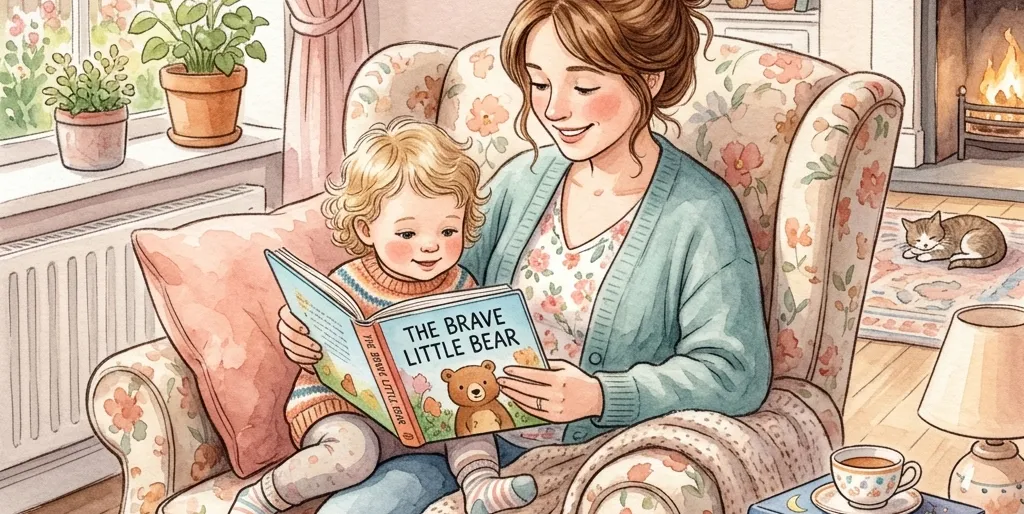
Welcome to our cozy little home, where “Please eat your breakfast,” “Kérlek, edd meg a reggelidet,” and “Por favor, come tu desayuno” are all perfectly normal ways to start the day.
Raising a child is a beautiful, chaotic, and humbling experience. But when you add three different languages into the mix, it becomes a fascinating, sometimes bewildering, puzzle. In our household, we are currently raising our toddler trilingually: English (the community language), Hungarian (my native language), and Spanish (my partner’s native language).
If you are currently on a multilingual parenting journey, or thinking about starting one, here is our honest take on how it actually goes, what has worked for us, and what we’ve learned along the way.
The Strategy: OPOL (One Parent, One Language)
We decided early on to use the OPOL (One Parent, One Language) method. It is one of the most popular and recommended strategies for multilingual households.
- My role: I speak exclusively Hungarian to our toddler.
- My partner’s role: Speaks exclusively Spanish.
- Our collective role: We speak English to each other (as our common language) and our toddler hears English in the community, at daycare, and when we are out and about.
In theory, this sounds beautifully structured. In practice? It’s a lot of mental switching, occasional mix-ups, and a lot of patience.
The Reality: A Mixed Salad of Words
One of the most common questions I get is, “Doesn’t it confuse them?”
The short answer is: No, but it does lead to some hilarious mix-ups.
At two years old, our toddler’s vocabulary is a colorful mosaic. A single sentence might sound like: “Mama, kérek more aqua!” (Mama, please, more water!). In the beginning, it’s easy to worry that they are falling behind or confused. But research—and our own experience—shows that this is a completely normal phase called code-mixing. They aren’t confused; they are simply grabbing the easiest, most accessible word from their mental library to get their point across!
3 Tips that Keep Us Sane (and Consistent)
If you are trying to maintain multiple languages, here are three things that have made a world of difference for us:
- Consistency is Key (But Give Yourself Grace): It’s easy to slip into the community language when you are tired or out in public. We try our best to stick to our designated languages, but we don’t beat ourselves up when we slip up.
- Make it Fun, Not a Chore: We sing songs, read plenty of books, and play games in all three languages. If it feels like a lesson, a toddler will tune out immediately. If it feels like play, they soak it up like a sponge.
- Find Your Village: Connect with other multilingual families or seek out playgroups in your minority languages. Having other children model the language makes it feel alive and relevant to your child.
Final Thoughts
Multilingual parenting is a marathon, not a sprint. Some days, it feels like our toddler is fluent in all three; other days, they prefer a language of their own making. But seeing the joy in their eyes when they connect with grandparents in another country makes every repetitive song and mixed-up sentence entirely worth it.
Are you raising a multilingual child? What strategies have worked for you? Let’s connect and share our stories in the comments below!

Written by Natalie
Natalie is a former clinical microbiologist and UX researcher who is currently navigating the lovely, unpredictable path of motherhood. Follow along for research-backed strategies and real-life stories.